Pre-season results can offer insights into Fantasy Premier League strategy, but the correlation with regular season success remains complex and varied.
As pre-season football takes center stage, Fantasy Premier League (FPL) managers are naturally drawn to the outcomes of friendlies, players' performances, and potential value picks. But how much weight should these pre-season displays carry? Is there a tangible link between these warm-up matches and the ensuing league campaign?
To better understand this dynamic, let’s reflect on the summer build-up to the 2025/26 season.
TEAM PERFORMANCE IN PRE-SEASON
Drawing insights from the previous pre-season guide, several teams including Liverpool, Manchester City, Chelsea, Brighton & Hove Albion, Fulham, Brentford, Aston Villa, and West Ham United posted impressive win rates in their friendly matches. However, it’s critical to analyze what happened next: after Gameweek 6, their league standings were quite telling—Liverpool was first, but the others languished from seventh to nineteenth.
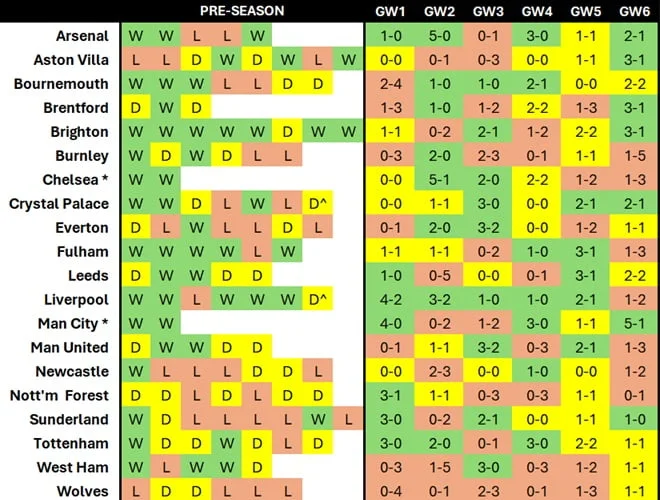
* Chelsea and Man City participated in the Club World Cup; the Community Shield featured Crystal Palace and Liverpool
Despite impressive friendly results, teams like Aston Villa recorded no goals in their first four matches, struggling until their sixth fixture. West Ham United faced similar troubles, finishing relegated after a poor start, despite a solid summer. Their performances highlight a trend seen in other leagues as well: strong pre-season form doesn't always translate to success when the competitive stakes are raised.
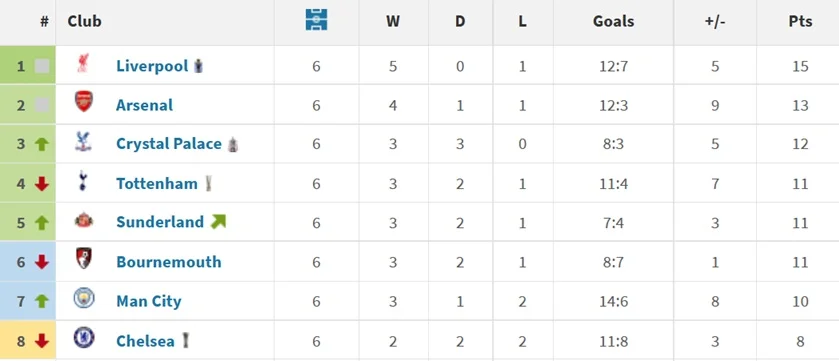
Above: Early Premier League standings through Gameweek 6, from Transfermarkt
Meanwhile, the league's top eight after Gameweek 7 featured Arsenal, Crystal Palace, Tottenham Hotspur, Sunderland, and Bournemouth. Interestingly, Arsenal lost two of their last three friendlies, while Crystal Palace's mixed results included the Community Shield victory. Conversely, newly-promoted Sunderland managed to secure a top-half finish—a feat that underscores the unpredictability of the league. Their poor pre-season performances often leave analysts scratching their heads about how swiftly fortunes can change.
What this means for you—if you're managing an FPL team—is that relying solely on pre-season results might lead you astray. While some teams have found a rhythm and hit the ground running, others have fallen flat despite positive warm-up performances.
Even Everton, Newcastle United, and Wolverhampton Wanderers faced challenging starts, finishing toward the bottom of the table, with Newcastle impacted by off-field distractions. These factors further complicate the predictive nature of pre-season metrics, often leading managers to overlook nuances that could be critical to success.
PLAYER PERFORMANCE IN PRE-SEASON
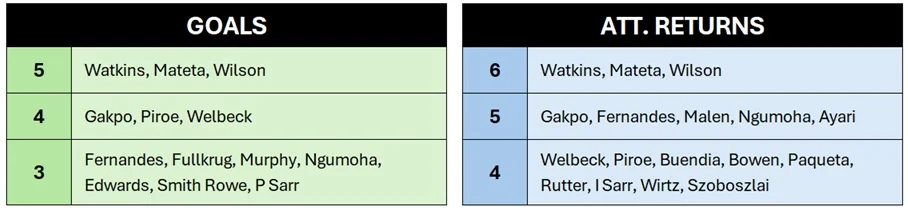
On an individual level, several players made headlines during pre-season. Notably, Ollie Watkins, Jean-Philippe Mateta, and Harry Wilson each netted five goals along with an assist. However, their subsequent league output varied drastically. While Wilson enjoyed a solid FPL season, it took considerable time for him to find his footing, with only Mateta managing to carry his pre-season form into the regular season. This inconsistency is a significant hurdle that FPL managers must navigate, as betting on one player's pre-season performance can leave your squad vulnerable.
Watkins, despite his strong pre-season, delivered just one attacking return across his first 13 matches, showcasing the inconsistency an FPL manager may face. The unpredictable nature of player performance means even a pre-season star may struggle under the weight of high expectations in the regular season. This is where the depth of analysis becomes vital. Some higher-profile players, while not remarkable in pre-season, found success once competitive matches began. For instance, Dominik Szoboszlai had a solitary goal from free-kick brilliance in August, while Mohamed Salah quickly established his goal-scoring ability post-pre-season.
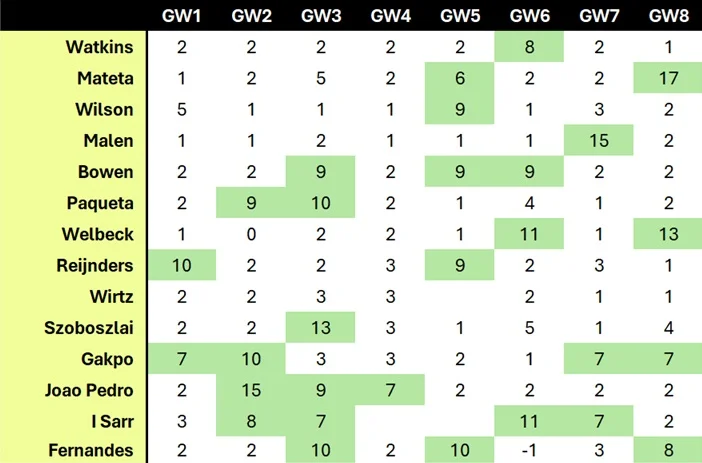
All these examples highlight how past performance doesn’t always predict future results reliably. Before making decisions, think about how different environments affect players’ decisions, styles, and performances. Certain exciting players may simply fail to replicate their pre-season form once the competition ramps up. This is particularly true for those whose roles change in the transition from friendlies to the competitive season.
SIGNIFICANCE OF PRE-SEASON PERFORMANCE
This all begs the question: what does this mean for FPL managers? There’s a delicate balance to strike between paying attention to pre-season signs and avoiding overreliance on them. On one hand, pre-season can act as a preview of possible underlying team strategies or player rotations. On the other, managers must safeguard against the pitfalls of assuming that a player who shines in friendly fixtures will maintain that momentum when it truly counts.
Given the complexities of football, both on and off the pitch, successful FPL management hinges on more than just simple analysis of pre-season statistics. Recognizing patterns, understanding player dynamics, and looking for indications that a player’s role or form has shifted can provide deeper insights. Managers should approach the pre-season with a critical eye, being open to the idea that traditional indicators can sometimes be misleading.
CONCLUDING THOUGHTS

The evidence suggests that while some players and teams carry forward momentum from pre-season, many do not. Particularly concerning are those teams that struggle in friendlies, as they often continue to underperform into the season. Therefore, FPL managers should consider pre-season indicators with caution, recognizing that they are one piece of a larger puzzle.
In essence, pre-season can provide important insights. However, focusing solely on goal tallies or friendly match outcomes could mislead decisions. Analyzing minutes played, formations, and players' fitness as the season approaches is paramount in forming a competitive FPL team.
The road ahead might be tricky, but discerning managers can use pre-season insights for a tactical edge, provided they're grounded in a holistic approach to analysis.

Discussion
Sign in to join the discussion.