Donald Trump expresses support for FIFA President Gianni Infantino, stressing the potential fallout of his removal amid rising discontent across football leadership.
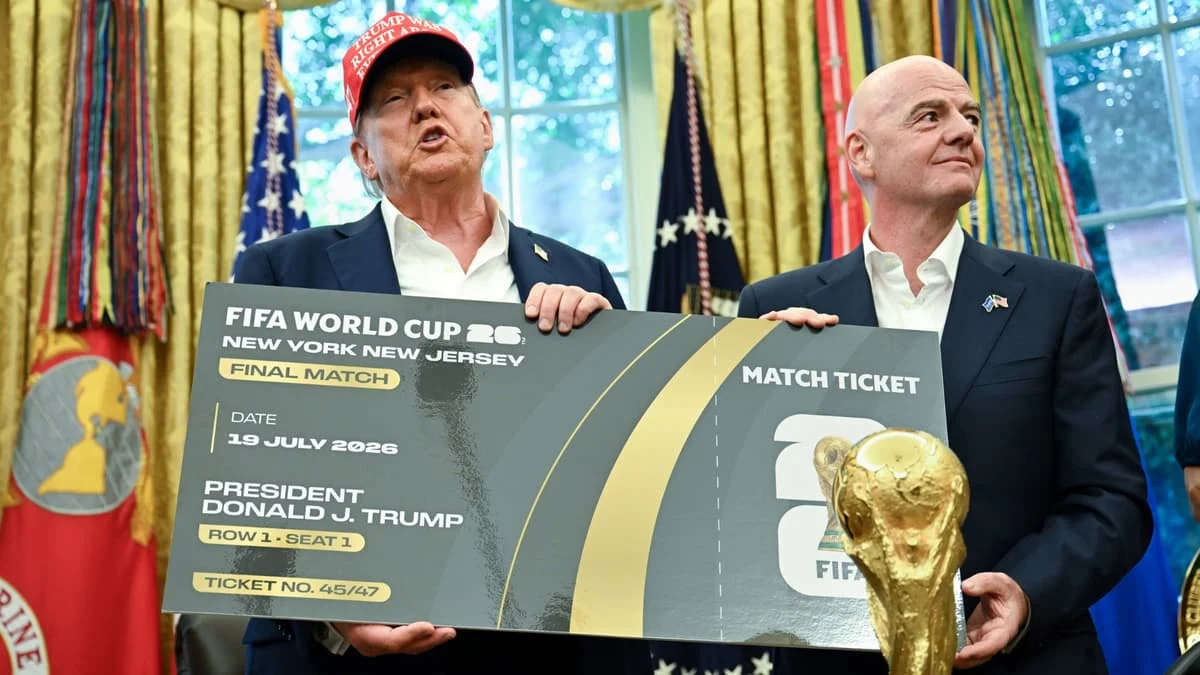
US President Donald Trump has publicly voiced his disapproval of any potential move to replace FIFA President Gianni Infantino, calling it a "terrible mistake." His defense comes on the heels of Infantino's criticism following a controversial plan to sell shares of the World Cup to private investors, a proposal that has now been abandoned after facing severe backlash from within the football community.
Despite mounting pressure for Infantino to resign, particularly after his ambitious FIFA Forward Enterprise (FFE) initiative drew ire, Trump's endorsement signals a significant ally in an increasingly tumultuous environment for the FIFA president. Infantino, who recently turned 56, had aimed to capitalize on the anticipated success of the 2026 World Cup in North America by enlisting a private investment firm, Thrive Eternal, to manage commercial rights. However, after fierce criticism from football veterans, including former FIFA president Sepp Blatter, Infantino's proposal crumbled.
“FIFA would be making a terrible mistake if, for any reason, they even considered replacing President Gianni Infantino,” Trump stated on his Truth Social platform. He extolled Infantino's leadership during what he calls the "most successful World Cup" ever and warned that his departure could jeopardize the future profitability and success of the tournament. Trump concluded his message with a clear endorsement, asserting allegiance to Infantino's stewardship.
Infantino Faces Calls for Resignation from Football Leaders
While Trump stands by Infantino, a coalition of influential figures in football governance is calling for a change in leadership. The leaders of UEFA, CONCACAF, and the Asian Football Confederation (AFC) released a stark statement expressing their collective discontent. They emphasized that football belongs to a broader community rather than an individual leader, underscoring the importance of shared governance and integrity in football administration.
This backlash isn't just about one proposal; it reflects deeper issues within FIFA's governance structures. The joint statement articulated a concern that recent events represent not just a failure in communication, but a breach of trust fundamental to the integrity of sport. They outlined how decisions in recent years—such as the expansion of tournaments and the allocation of World Cup hosting rights—were collective achievements rather than the pursuits of a single person. This idea of shared governance echoes across various sports organizations, suggesting that reliance on individual leadership can lead to instability.
The coalition has made it clear that their concern isn't merely financial; rather, it's about the integrity of governance within FIFA itself. They argue for responsible management of FIFA's resources to support all member associations more equitably. Such discussions around governance can often lead to broader scrutiny of how power and decision-making authority are distributed. Furthermore, any moves that undermine the collective agreements made within the community can have long-lasting repercussions on the sport’s governance.
In their criticism, they specifically pointed to Infantino’s failed proposal to sell World Cup interests as a severe miscalculation that not only threatened his leadership but also jeopardized the trust of football constituencies that have relied on FIFA's guidance and stability. Labels of corporate avarice and overreach now hang in the air long after the failed proposal was shelved. The confederations subsequently demanded a comprehensive and independent review of decision-making processes within FIFA, asserting that the internal mechanisms for accountability are sorely inadequate. The implications of these demands could reshape not just leadership, but the foundational ethos of FIFA.
The Stakes for FIFA's Leadership
These actions and statements are particularly significant as Infantino is set to face re-election in March, a scenario that just became more complex. Initially perceived as a straightforward election, the atmosphere has shifted considerably with the emergence of potential challengers discussed among the confederations. One such figure, Nasser Al-Khelaifi, has stirred speculation about his intentions, further complicating Infantino’s tenure. With internal challenges mounting, Infantino might need more than external support to maintain his position.
The tension surrounding FIFA leadership is palpable, as dissatisfaction etches deeper into the operations and future governance of world football. While Trump’s support lends a political angle to the discourse, true stability may require a more fundamental reevaluation from within FIFA itself. If you’re working in this space, you’ll know that the leadership crisis could lead to widespread implications for football regulations, sponsorships, and the development of the sport.
Looking Ahead: Implications and Future Outlook
As the world of football watches closely, the upcoming months leading to the re-election will be pivotal not just for Infantino, but for the entire organization. The future direction FIFA takes could reshape the sport's governance and its trust with the global football community. The outcome of this leadership struggle might not only affect FIFA’s internal strategies but could also steer the broader narrative of how football is governed globally.
The stakes are higher than they appear. If FIFA doesn't act decisively to address the growing calls for reform, it risks losing credibility not just in the eyes of football associations, but among fans worldwide. The potential fallout could be significant—not just for Infantino’s presidency but for the very integrity of football governance itself. In a sport so deeply tied to culture and community, the reverberations of this leadership battle are likely to be felt long after the elections have concluded.
Discussion
Sign in to join the discussion.