Nottingham Forest's owner sues Crystal Palace for defamation following a banner that depicted him in a violent context during a match.
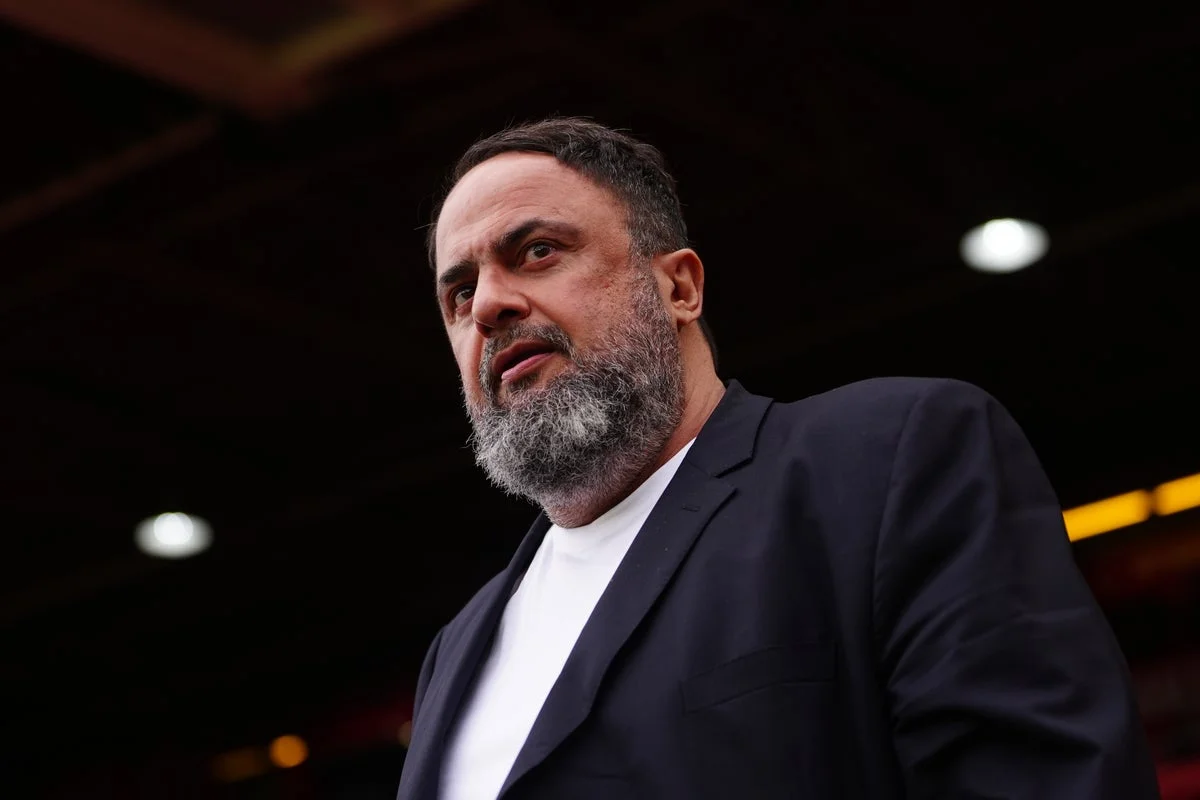
Evangelos Marinakis, the owner of Nottingham Forest, has initiated legal proceedings against Crystal Palace in the High Court stemming from a controversial banner displayed by the club's supporters. The banner in question portrayed Marinakis holding a gun to player Morgan Gibbs-White’s head.
The Context of the Banner Incident
This defamation suit was filed on Monday, nearly a year after the banner was showcased during a Premier League match at Selhurst Park. In a climate already ripe with tension between football clubs and their fanbases, this incident is hardly isolated. Football culture often walks a fine line between passionate support and unacceptable behavior, and the Holmesdale Road End of Crystal Palace is known for its fervent—sometimes aggressive—fan displays. The display was part of the Holmesdale Road End, where the club's hardcore supporters congregate, and alluded to Gibbs-White's sudden transfer u-turn and an uncomfortable interview he gave regarding the matter, in which Marinakis was a focal point.
The banner's content, which features threatening imagery, raises serious questions about the psychological threshold of football fan engagement. This incident reflects a broader trend in sports where fans often express dissent or rivalry through provocative acts. However, using violent imagery crosses a line that could prompt legal action, as seen here. Marinakis' legal response isn't just about protecting his image; it's also a statement against the normalization of such provocative displays. Football clubs, after all, bear responsibility for curbing inappropriate behavior among their supporters. Others have faced similar situations, leading to lawsuits and fines aimed at fostering a safer environment for players and personnel alike. The potential implications of such displays can reverberate beyond the pitch, affecting community trust in clubs and fueling tensions between fans.
The Nature of the Legal Action
In addition to the violent imagery, the banner included unsubstantiated accusations against Marinakis, a prominent Greek shipping magnate who has consistently denied these claims. This isn't just a ‘he said, she said’ scenario; it's a legal battleground where defamation has to be proven. Marinakis is taking legal action against Crystal Palace and "Persons Unknown" to address the defamatory nature of the display. Establishing that this act damaged his reputation could be challenging, but Marinakis seems prepared for a battle that could set a precedent.
Legal actions of this sort are often complex and can stretch out for months or even years. They involve not only proving that the content is indeed harmful but also that it was presented with malicious intent. For fans who may feel emboldened by the anonymity of the stands, this raises crucial questions about accountability. Will supporters now think twice before expressing discontent through graphic displays, knowing they could face legal repercussions? There's an underlying tension in such cases; it reflects the broader struggles within football regarding expression, freedom of speech, and the limits of acceptable behavior. This isn’t likely to be a straightforward affair, and many will be watching closely.
The Response from Governing Bodies
Previously, the Football Association (FA) also reacted to this incident, emphasizing its seriousness. In November, they charged Crystal Palace for failing to prevent spectators from behaving in a manner deemed improper, following the banner's exhibition. The club faced a £50,000 fine in March, illustrating the FA's acknowledgment of Palace's awareness of the risk posed by such a display. This fine might seem minor in comparison to the millions involved in football at higher levels, but it signifies a vital stance against misconduct. It also poses a question about responsibility—should clubs bear the brunt of their fans' actions? And yet, it raises another issue: how does one effectively police fan behavior without infringing on the passionate, sometimes reckless culture that defines football? The FA's measures demonstrate that while they are committed to maintaining decorum, they face a balancing act that could easily tip either way.
The Broader Implications for Football
The match held on August 24, 2022, saw escalating tensions between the teams, particularly after Crystal Palace's demotion from the Europa League due to breaches in ownership regulations, a situation that indirectly benefited Nottingham Forest. This backdrop contributes heavily to the current legal standoff between Marinakis and Crystal Palace. What this means for you is that this situation isn't merely about one incident—it's indicative of the simmering rivalries, corporate governance issues, and the sometimes toxic culture that can emerge in competitive sports. If you're working in this space, you have to consider how fan culture can have real-world consequences, not only for the individuals involved but for the clubs as well. One misstep—either by a fan or an organization—can lead to a domino effect of legal entanglements, fines, and reputational damage. The ripple effects of this incident will likely extend beyond the immediate parties and could usher in more stringent regulations on fan displays.
Looking Ahead
As the legal proceedings unfold, Marinakis, along with his legal team, has reached out to both Nottingham Forest and Crystal Palace for their comments on the matter. The ultimate outcome may redefine how clubs engage with their supporters and how they approach issues of fan expression. It could potentially encourage greater accountability among fans, urging them to reconsider what forms of expression are acceptable in the heat of the moment. With sports increasingly scrutinized for the actions of their supporters, this case might serve as an essential turning point. The broader football community will watch closely, for what happens here could set a precedent that affects the relationship between fans, clubs, and the legal ramifications that follow. As tensions continue simmering on and off the pitch, this lawsuit won't just be another headline; it might well be a landmark case.
Discussion
Sign in to join the discussion.