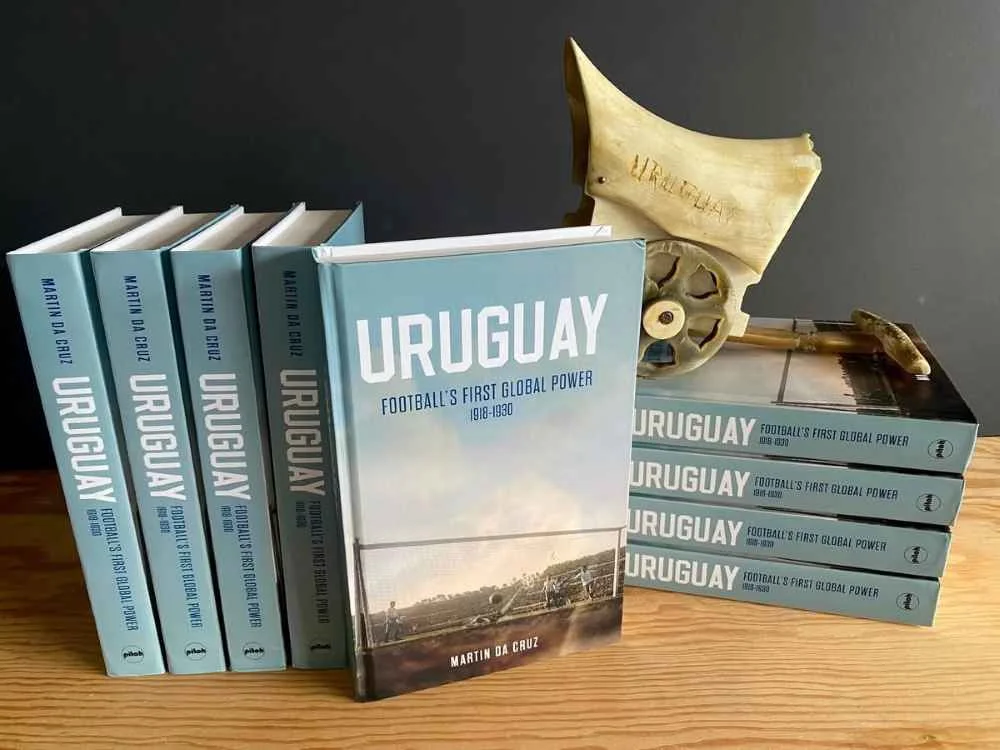
Discover Uruguay's journey from regional champions to global football power between 1918 and 1930 as chronicled in Martin da Cruz's insightful book.
As the popularity of football surged beyond its Olympic origins in the 1920s, a pivotal transformation was underway, with Uruguay leading the charge as the sport stepped into a new global arena.
Founded in 1830 as a key buffer state between Argentina and Brazil, Uruguay quickly embraced football by the late 19th century. Martin da Cruz’s previous work, From Beauty to Duty: A Footballing History of Uruguay, traces the development of a unique Uruguayan football culture. His latest book, Uruguay: Football’s First Global Power, resumes the narrative in 1918, highlighting Uruguay's triumphs as they prepare for global recognition.
Da Cruz masterfully intertwines storytelling with contemporary press coverage, drawing on a rich array of Spanish-language sources and Uruguay's established tradition of sports journalism. His intense research deepens the narrative, filling each page with engaging insights.
Key moments are highlighted, such as Uruguay's impressive victories over a Basque touring team in 1922, which significantly bolstered the national team's aspirations. Once learners from visiting teams, Uruguayans proved their prowess on the field, defeating players who had previously represented Spain in the 1920 Olympics. This fueled their ambitions to face international adversaries at the upcoming 1924 Games in Paris.
The financial challenge of participating in these games loomed large for the team, often entangled in amateurismo marrón—a system where players were compensated discreetly while maintaining jobs. To offset costs, the federation president Atilio Narancio took the extraordinary step of mortgaging property to finance a pre-Olympic tour through Europe to generate necessary funds.
Da Cruz brings Uruguay’s European journey to life, portraying iconic figures like José Nasazzi, José Leandro Andrade, Héctor Scarone, and Pedro Arispe with authenticity. The narrative dispels the myth of Uruguay as a complete unknown, as their arrival in Spain was met with considerable anticipation. However, their debut match featured a mix-up, with the Uruguayan flag displayed upside down and the wrong national anthem played. Despite these blunders, Uruguay would go on to impressively announce their presence on the world stage.
The exploration of the treatment of black players during this era, specifically highlighting Andrade and his predecessor Isabelino Gradín, evolves into a compelling thread throughout the book. While Uruguay was ahead of many nations in integrating black athletes, da Cruz nuances this integration by revealing the persistent challenges these players faced. Andrade's dual existence as a celebrated athlete and underrepresented figure reflects the complex dynamics of race during this time, alongside the European fascination with black culture evident in his reception in Paris.
Date of triumph continued in 1928 when Uruguay secured a second Olympic title in Amsterdam. Diplomatically, they faced an unexpected opportunity as they successfully bid to host the inaugural FIFA World Cup in 1930, coinciding with the nation’s centenary celebration. Although European associations initially hesitated to attend, successful lobbying efforts ensured the participation of Belgium, France, Yugoslavia, and Romania, which helped legitimize the tournament's global stature.
As preparations for the World Cup unfolded, the atmosphere was both charming and chaotic compared to modern standards. The final was a memorable rioplatense derby, culminating in Uruguay claiming its third title. Da Cruz vividly recounts the events of that day, illustrating the historic significance of this achievement. “Times will change. Laws and customs will evolve,” noted El Día, reflecting upon the lasting legacy of Uruguay's athletes and their monumental victories at Colombes, Amsterdam, and the Centenario.
Rather than retroactively imposing a contemporary lens, Uruguay emphasizes the perspectives of those who experienced these events firsthand, anchored by contemporary press archives. The result is a deeply immersive portrayal of Uruguay's ascension as a footballing power and the inception of the world’s preeminent sports event, the FIFA World Cup.
Uruguay: Football’s First Global Power 1918-1930 is available from Pitch Publishing
Discussion
Sign in to join the discussion.